Powering the Future: Why "Made in the USA" Batteries Are the Ultimate National Security Imperative
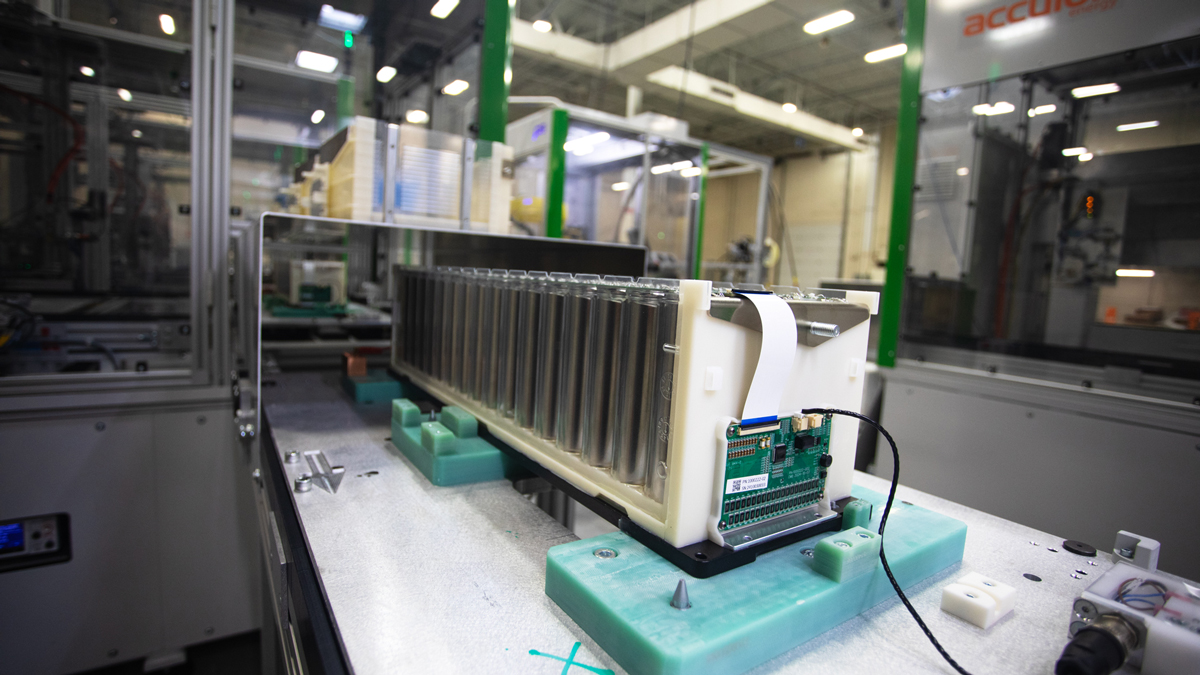
In today’s geopolitical climate, energy storage has become a cornerstone of global technological and economic power. The defining strategic bottleneck of the coming decade will not just be microchips, but the advanced batteries that power everything from artificial intelligence data centers to military installations. Yet, as of this moment, North America relies on imports for a staggering 85% of its battery component needs, primarily fulfilled by China. This extreme reliance on a Foreign Entity of Concern (FEOC) for critical energy infrastructure has transformed domestic battery manufacturing from a matter of economic policy into a vital national security imperative.
The modern battlefield is deeply electrified. Whether it is an F-35 fighter jet, a reconnaissance drone, or a space-based weapon, mission readiness is currently entirely dependent on lithium-ion battery cells. Currently, approximately 90% of the cylindrical batteries used in defense and electronics are manufactured in China. In peacetime, this offshoring was viewed as an economic efficiency, but in a geopolitical conflict and uncertainty, it is a glaring vulnerability. Relying on Chinese manufacturing exposes US military systems to a range of risks, including backdoor firmware, counterfeit materials, and the sudden halting of exports for critical materials like graphite. As military planners will recognize, when your energy supply chain depends on an adversary, you have already lost half the battle.
Recognizing this severe threat, the US government has drawn a hard line. Under the 2024 National Defense Authorization Act (NDAA), the Department of Defense is barred from procuring batteries from specific Chinese-owned entities starting in 2027. This mandate forces defense contractors to rapidly secure "Made in the USA" or allied-made batteries that offer full traceability and transparency from raw materials to final pack integration. Without this traceable supply, a single compromised component from a blacklisted manufacturer could disqualify an entire energy system, leaving critical platforms grounded. To fill this manufacturing gap, the Pentagon is actively investing in domestic energy storage through the Defense Production Act, and allied partners like South Korean battery makers are stepping in to supply reliable cells for military use.
Beyond the military, the civilian sector faces equally dire challenges. The US electrical grid, telecommunications infrastructure, and critical backup systems all rely on high-capacity battery storage. Again, China's dominance over the global battery supply chain leaves North America vulnerable to strategic chokepoints, price manipulation, and even the potential manipulation of grid infrastructure by foreign adversaries. To combat this, the US must drastically scale up its domestic production. Industry experts compare the modern need for battery "gigafactories" to the vast network of oil refineries required to power the 20th century, emphasizing that massive domestic scale is required for security.
Securing the battery supply chain also requires a robust domestic recycling industry. Currently, North America lacks sufficient capacity to recycle its spent batteries, resulting in critical materials being exported—sometimes directly to foreign adversaries. Foreign government subsidies have created unfair competition that saps these valuable resources from domestic recyclers. Building a successful circular economy for materials, especially critical minerals, is essential to keep these resources onshore and reduce dependence on questionable international brokers. Furthermore, leaning into domestically abundant materials, such as sodium and metallurgical silicon, can help replace the heavily relied-upon Chinese content in battery production.
Establishing a robust, end-to-end domestic battery supply chain is not merely about job creation or clean energy; it is a fundamental requirement for strategic autonomy and security. America must prioritize consistent, long-term policies that support the build-out of domestic gigafactories and advanced recycling centers. In the era of electrified everything, you do not come out on top by outsourcing your power: you win by building it safely and securely at home.
American-Made Batteries Ready for Scale


Get Started Today
Tell us what challenge you are facing and we will provide a solution that meets your needs.